Who Are You, Really?
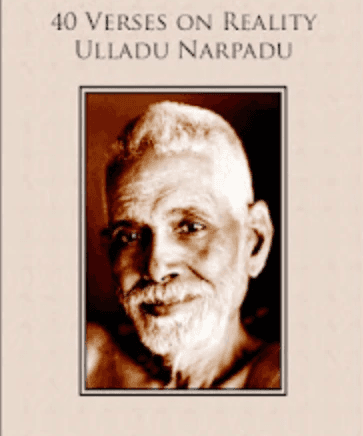
There is one question so simple a child can ask it, yet so deep that the greatest philosophers have spent lifetimes inside it. Ramana Maharshi believed this single question, asked sincerely, is all you ever need.
The question is: "Who am I?"
Imagine a slim booklet -forty short verses, each no longer than a tweet. No elaborate rituals, no lengthy theology, no prerequisite Sanskrit scholarship. Just forty quiet observations about the nature of Reality, written by a sage who had answered the question "Who am I?" so completely that he spent the rest of his life radiating that answer without effort. This was Bhagavan Ramana Maharshi, and his Ulladu Narpadu-the Forty Verses on Reality- is his philosophical masterwork.
S. S. Cohen, who lived with Ramana and wrote one of the most accessible English commentaries on this text, described it as the condensed essence of the entire Advaita Vedanta tradition. Non-duality. The teaching that behind all appearances — behind every thought, every object, every person — there is only one Reality, and that Reality is what you truly are.
This essay walks through the ten core teachings of this text in plain language, with everyday examples, because Ramana himself always insisted that Truth is not complicated. It is, he said, the most natural thing in the world — even simpler than breathing.
Awareness Is the Ground of Everything - Sat-Chit-Ananda
Ramana's first and most fundamental point: Reality is not a thing you can see or touch or weigh on a scale. Reality is the Awareness in which all things appear. It is self-luminous, meaning it needs no outside lamp to reveal it, the way a lamp needs no second lamp to be seen. Philosophers call this Sat-Chit-Ananda: Existence-Consciousness-Bliss. Three words for one undivided truth.
The Screen and the Movie
Think of a cinema screen. Stories appear on it — heroes, battles, sunsets, tears. The screen is never touched by the drama; it simply allows the story to be seen. Awareness is like that screen. Every thought you have, every sound you hear, every emotion you feel -all of it plays upon the screen of pure Awareness. The screen was there before the movie began. It will be there after the projector is switched off. You, in your deepest nature, are not the drama. You are the screen.
To "know" this Reality directly, Ramana says, you must become thought-free, even briefly and simply rest in the Hridayam, the Heart, the centre of pure being. This is not the physical heart. It is the felt sense of "I am" before any story is added to it.
The Ego Is a Phantom - Ahamkara
If Awareness is the screen, what creates the impression that you are a separate person living inside a separate body, in a world full of other separate people? Ramana's answer: the ego -Ahamkara, the "I-maker." The ego is not something evil or sinful. It is simply a misunderstanding, a case of mistaken identity.
The ego looks at the body and says "I am this." It looks at the mind and says "I am these thoughts." From this one mistake, a whole universe of separation unfolds; I and you, God and worshipper, world and self. Ramana calls this the creation of a false triad. When the ego is dissolved through deep self-inquiry, the triad dissolves too. What remains? Only the One.
The Rope and the Snake
Vedanta offers a classic image: a man walking at dusk sees what appears to be a snake on the road. His heart lurches; he freezes in fear. Then someone shines a torch , and what he thought was a snake is merely a coiled rope. The snake never existed. The fear was entirely real, but its cause was not. The ego is the snake. Self-inquiry is the torch. Once the light is on, the phantom simply is no more. There is nothing to fight, nothing to destroy -just a misperception corrected.
The World Is a Mental Projection - Maya
"The world is not outside you. It rises in you, as you, and dissolves back into you. Inquire into the source of this rising."
This is where many people pause and push back: "Are you saying the table in front of me is not real? The traffic outside is not real?" Ramana's teaching is more subtle than simple denial of the world. He says the world is apparently real; it functions, it has cause and effect, you should still look both ways before crossing the road. But its ultimate, independent reality is an illusion, a Maya, because it depends entirely on a perceiver for its existence.
The Dream World
Every night, when you dream, an entire world appears. Cities, people, conversations, emotions, even physical sensations -all of it is vividly real while you are dreaming. The moment you wake up, that whole world vanishes instantly. Where did it go? It never had existence separate from the dreaming mind. Ramana says the waking world is the same: real enough within its frame of reference, but not independently real. The ego and the world rise together, like two sides of the same coin, and they dissolve together when the inquiry is complete.
Knowledge, Time, and Space Are Mind-Made
Two closely related teachings: first, that what we call "knowledge" and "ignorance" are both concepts arising in the mind. The Self which is pure Awareness is beyond both. It neither knows nor ignores in the ordinary sense; it simply is, luminously, without effort. Seeing the world as many separate things is the state of ignorance; recognising that everything is one Reality is wisdom.
Second, time and space, the coordinates by which we navigate daily life, are also mind-made. The past is just a present memory. The future is just a present anticipation. Both are modifications of now. The Self is not inside time; time appears inside the Self, the way waves appear on the ocean without the ocean going anywhere.
The Ruler and the Measured
A ruler measures length. But the ruler itself has no length except as measured by another ruler, which would require yet another — an infinite regress. Time measures change. But time itself is only felt by a mind. Without a mind to register "before" and "after," there is simply the eternal, changeless now. The Self is that now ,not a fleeting moment, but the ground in which all moments arise and dissolve.
Self-Inquiry Is the Direct Path - Atma Vichara
If there is one teaching for which Ramana Maharshi is known across the world, it is this: instead of endlessly debating philosophy, instead of performing complicated rituals, instead of trying to force the mind to be quiet and simply ask: "Who am I?" This practice is called Atma Vichara, self-inquiry, and Ramana calls it the most direct path to liberation.
The method is disarmingly simple. When a thought arises for e.g. "I am worried," "I am happy," "I am bored" , do not follow the thought outward into its story. Instead, turn attention back to the one who claims to be worried or happy or bored. Who is this "I"? As you trace the "I" back toward its source, the individual thought dissolves. When you trace deeply enough, the ego itself dissolves into pure, boundless Consciousness, the real Aham, or "I-I," which Ramana says is always already present.
The Thorn and the Thorn
Ramana often used the image of using a thorn to remove a thorn embedded in your foot. You use one thorn (the question "Who am I?") to remove the other thorn (the ego and its endless thoughts). Once the splinter is out, you do not keep the first thorn either, you discard both. The question "Who am I?" is a tool to dissolve the ego; once the work is done, even the question falls away in pure, wordless being.
The Ego Is the Root of All Suffering
Why do human beings suffer? Every tradition of wisdom has grappled with this. Ramana's answer is precise: because the ego, identifying itself with a body that is born and will die, takes on all the body's vulnerabilities as its own. Birth, death, pleasure, pain, gain, loss ; the ego rides this rollercoaster and calls it "my life." But who put you on the rollercoaster? The ego did, by falsely claiming ownership of a body that was never, in ultimate reality, "yours."
The solution is not to destroy the body or run away from the world. It is a radical act of surrender otherwise called Atma-Nivedanam - the complete offering of the false "I" back to its source. This is not passive resignation; Ramana calls it an active, courageous process of honest looking.
The Borrowed Crown
Imagine an actor who plays a king in a drama. He wears the crown so long and so convincingly that he begins to believe he truly is the king. When the director calls "cut" and the stage lights dim, if the actor still insists he is royalty, he will suffer every slight to his fictional status as a personal wound. The ego is this actor. Liberation is simply removing the costume at the end of the performance , not with grief, but with relief.
Liberation Is Not an Achievement - Moksha
"To ask 'Who am I?' is not to philosophise. It is to turn a searchlight on the searcher. In that light, the searcher melts. What remains is the Light itself."
Here is perhaps the most radical and counter-intuitive teaching in the entire text: liberation or Moksha is not something you attain. You cannot earn it with enough years of meditation, enough acts of charity, enough Sanskrit recitation. Why? Because you were never actually bound.
Bondage and liberation are both concepts that exist only in the mind of the ego. The Self which is pure Awareness, has never been trapped, never been diminished, never been touched by the drama of the world. What appears as "attaining liberation" is, from the Self's perspective, simply the recognition of what was always already true.
Waking From a Nightmare
You are having a terrible nightmare in which you are trapped, pursued, helpless. You wake up, heart pounding. In the waking state, you are immediately free. But notice: you did not have to do anything in the dream to achieve freedom. The nightmare's prison bars had no real substance. Waking up was sufficient . The waking state was always there, waiting, even while the dream raged. This is what Self-Realization is like: not an arrival at somewhere new, but a waking from somewhere you never truly were.
Devotion and Inquiry Arrive at the Same Shore - Bhakti & Jnana
Ramana was extraordinarily inclusive. He did not insist that self-inquiry was the only valid path. He taught that sincere devotion or Bhakti to whichever deity , whether to Shiva, to Krishna, to Christ, or to any other form of the Divine , ultimately leads to the same destination. The crucial word is sincere. True devotion dissolves the devotee into the Beloved, ego into God. And once the ego dissolves, what remains is the formless Absolute . This is the very same goal the self-inquiry practitioner arrives at by a different route.
Rivers to the Ocean
The Ganga and the Kaveri take different routes through different terrains, fed by different rains, worshipped by different peoples. Yet both arrive, without argument, in the same ocean, where their individual names and natures dissolve. Devotion (Bhakti) and knowledge (Jnana) are like those two rivers , different in form, identical in destination. "To see God," Ramana says, "is to merge with Him." At the deepest level of prayer or meditation, the one who is praying disappears into the presence prayed to.
Non-Duality Is the Supreme Truth — Advaita
Karma which is the law of action and consequence is sustained, Ramana says, by the sense of doership: the belief "I am the one doing this." As long as the ego says "I acted; now I must face the result," karma binds. But when the false "I" dissolves in self-inquiry, the actor disappears. Without an actor, there can be no personal karma. Actions still happen and the body still breathes, the hands still work but they happen like a river flows: naturally, without a controller claiming credit or blame.
This is the summit of Ramana's teaching: Advaita, non-duality. Not two. Not "God up there and me down here." Not "enlightenment over there and ignorance over here." Only the One whether you call it God, Self, Brahman, Awareness, Reality; appearing as many, the way one sun appears in a thousand different water pots. Break a pot, lose one reflection, but the sun remains untouched.
One Gold, Many Ornaments
A goldsmith melts gold into rings, bangles, chains, coins, and figurines. Each ornament has a name and a shape. People argue: "Is the bangle more valuable than the coin?" "Which shape is the true form of gold?" But the goldsmith smiles. He knows that all the ornaments are simply gold, and that their shapes are temporary. Melt them all and one gold remains. Reality is that gold. All creatures, all worlds, all experiences are its ornaments ; real as forms, but not separate from the one substance from which they were made.
Conclusion — The Simplest and Most Radical Teaching
The Forty Verses on Reality fit in a pamphlet. The practice they prescribe takes no equipment, no subscription, no guru's permission, no auspicious date on the calendar. It requires only this: the willingness to turn the searchlight of attention from the noise of the world back toward the one who is listening to the noise.
Ramana's message, in plain language, is this: You are not who you think you are. The body, the name, the story of your life — these are the movie playing on the screen. You are the screen. And the screen has never been dirty, never been hurt, never been small. It was, is, and always will be pure, open, luminous — perfectly whole, perfectly free.
Ask "Who am I?" not as a riddle to be solved by the mind, but as a doorway to be walked through by awareness. The door has always been open. It was never, in truth, closed.
Share this story
More Stories
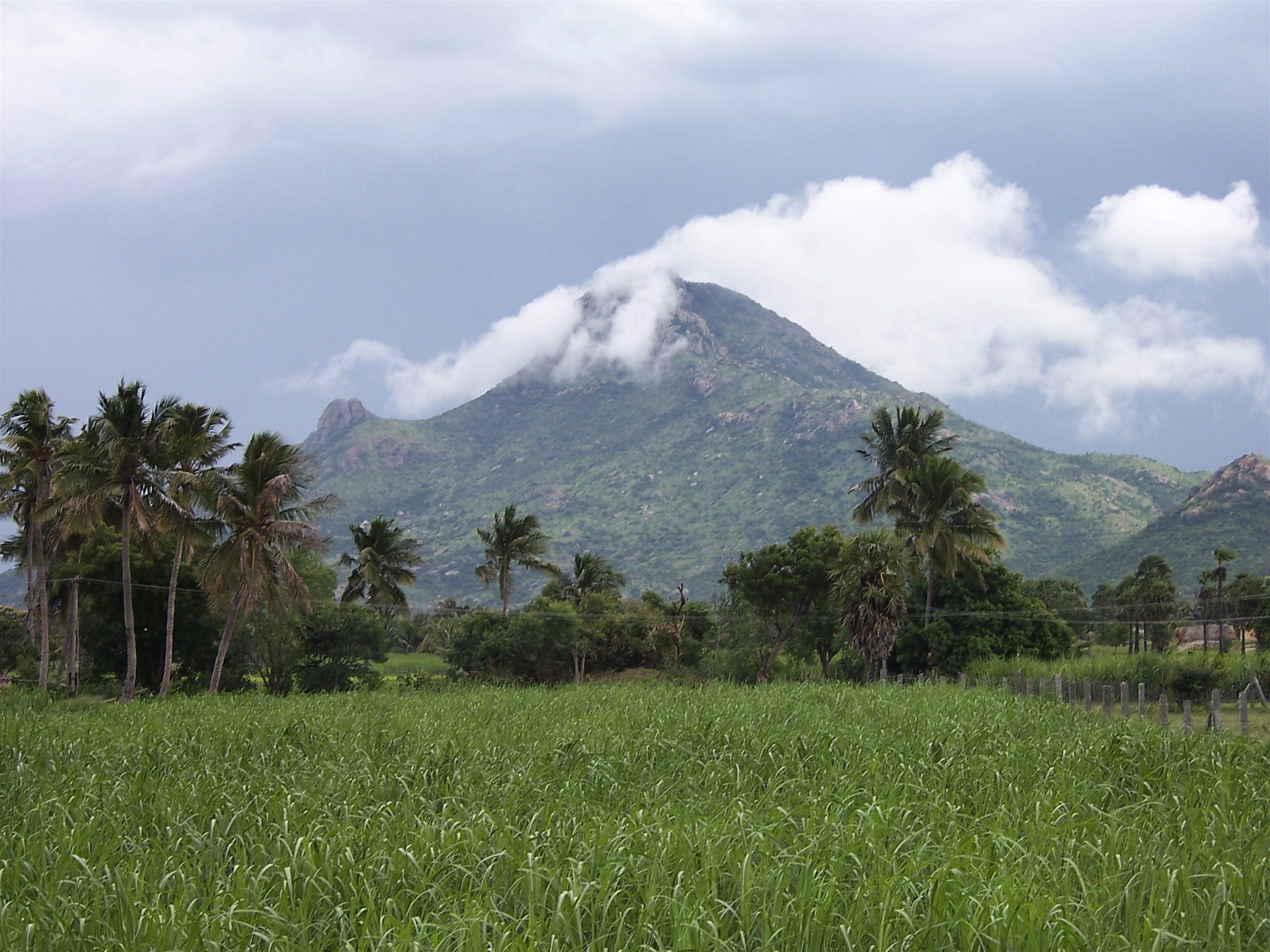
What remains when the mind goes quiet?
A short essay on the silence that was never absent — and how to meet it.
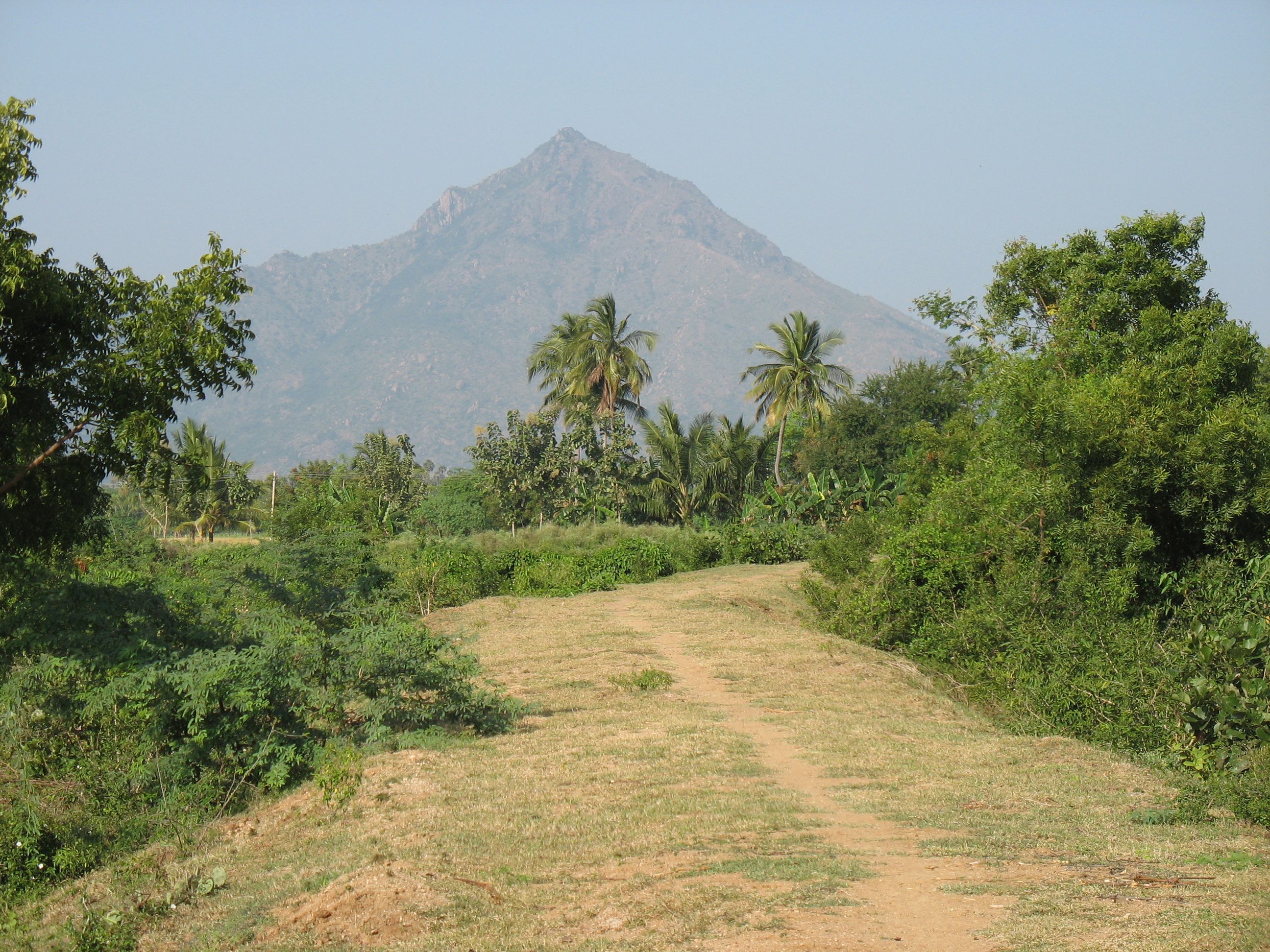
Turning the Light Inward: The Practice of 'Who Am I?'
Self-enquiry is not an intellectual exercise but a sustained, gentle attention to the sense of 'I' before thought claims it. Ramana Maharshi described it as the most direct path to recognising one's true nature. This article traces the practice from its first tentative steps to its natural deepening in silence.
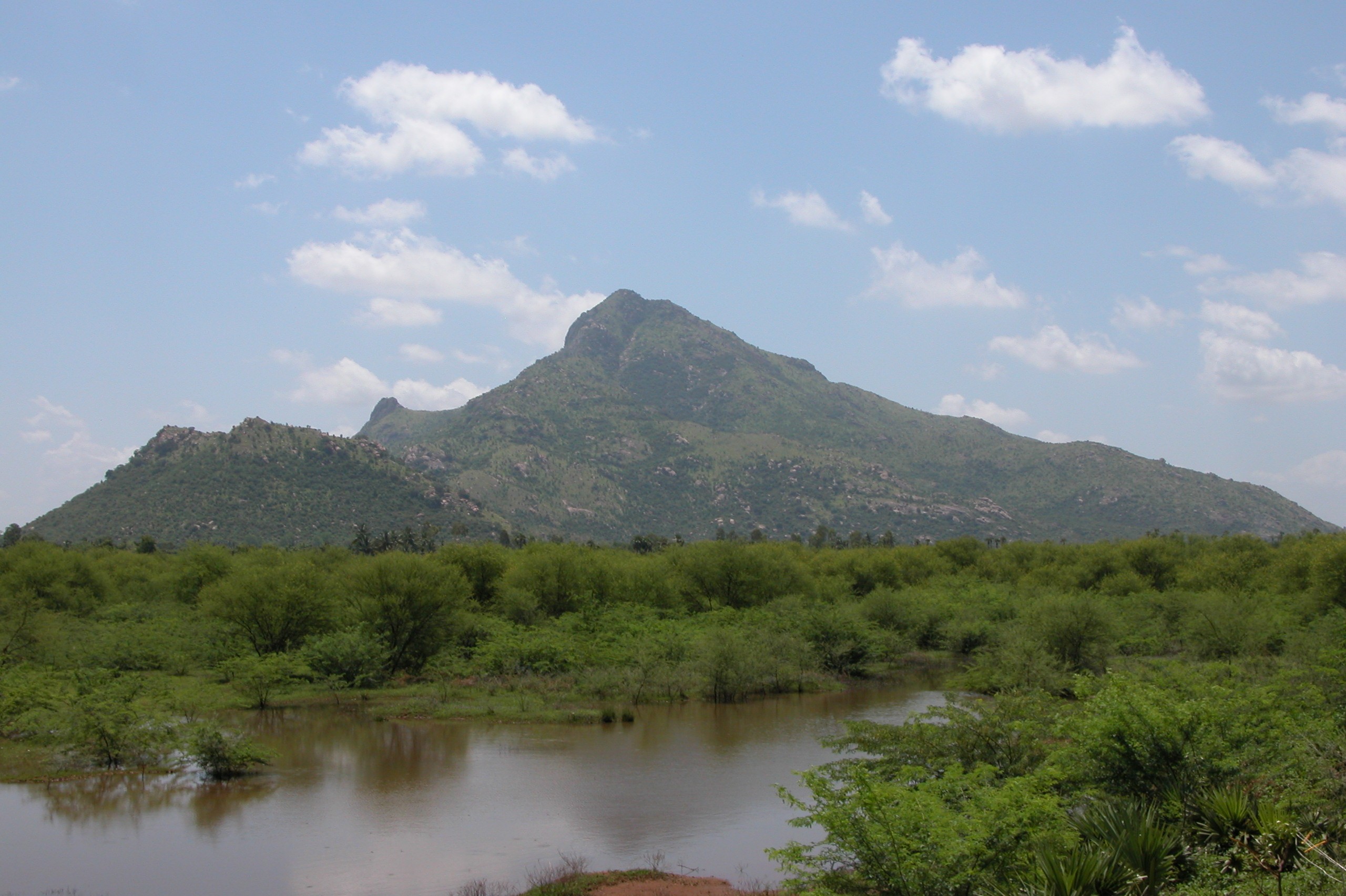
The Silence That Speaks: Resting in the Source of Awareness
Enquiry into the nature of the 'I' is not an intellectual exercise but a gentle, sustained turning of attention toward its own origin. As the Maharshi often pointed out, the mind that sincerely asks 'Who am I?' discovers that the question and the questioner dissolve together. What remains is not emptiness but the luminous stillness of pure Being.
Arunachala
Subscribe