Upadesa Saram: Ramana Maharshi's Essence of Instruction
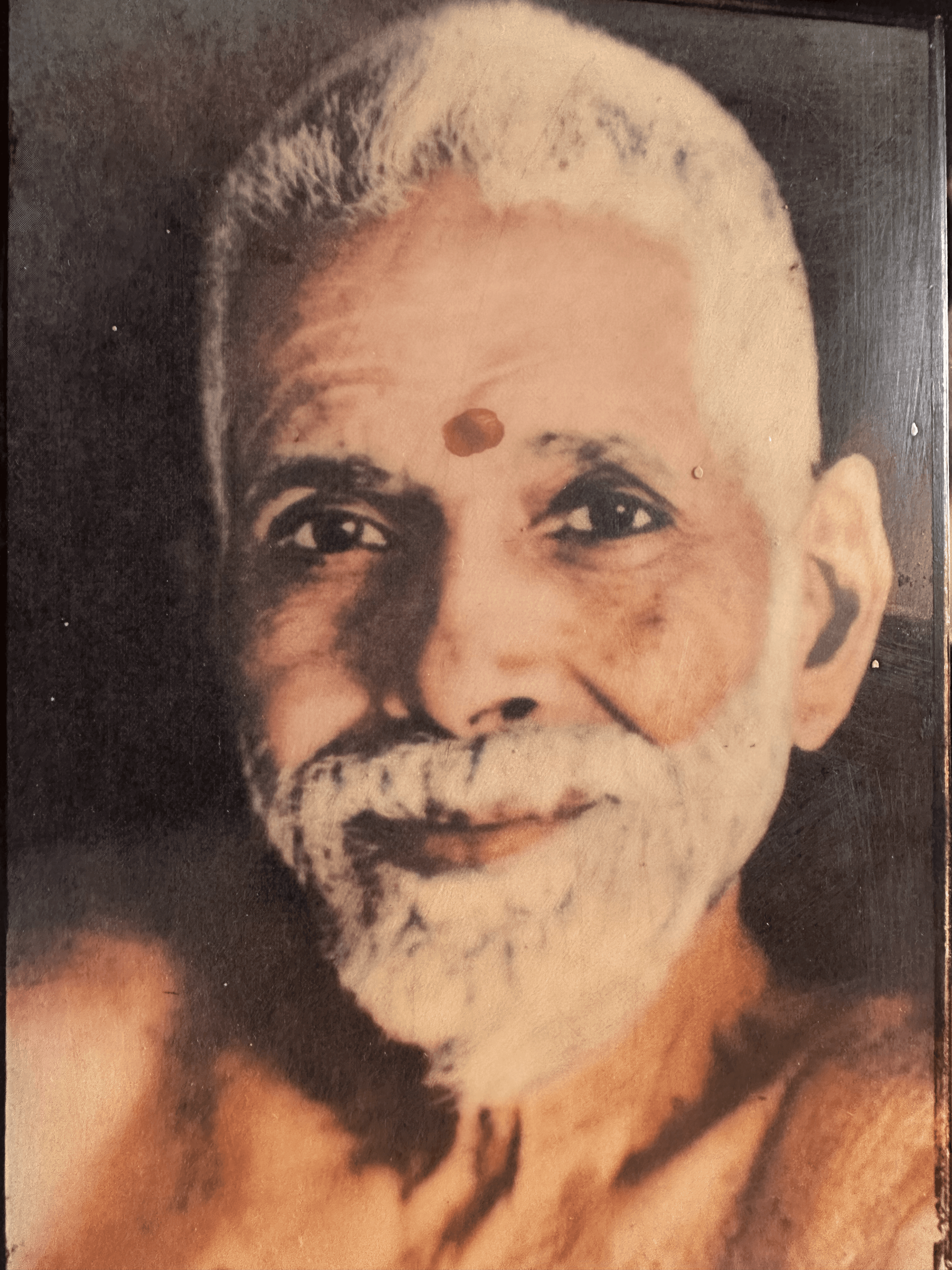
Introduction: The Crown Jewel of Ramana's Teachings
In the vast landscape of spiritual literature, few texts shine with the clarity and precision of Upadesa Saram—the "Essence of Instruction." Composed by Ramana Maharshi in 1927 at the request of his devotee Muruganar, this masterwork of 30 verses distills the entire path to Self-realization into a form so compact yet complete that generations of seekers have found within it everything necessary for liberation.
The Upadesa Saram emerged from a unique circumstance. Muruganar was composing a Tamil rendering of the Puranic legend of Shiva appearing as Nataraja to instruct sages performing rituals in the Daruka forest. He requested Ramana Maharshi to compose verses summarizing the spiritual instruction Shiva would have given. What emerged was not merely a poetic exercise but a complete spiritual manual, a roadmap from the preliminary practices of karma and bhakti to the supreme realization of the Self.
Originally written in Tamil as Upadesa Undiyar, Ramana himself translated it into Sanskrit (Upadesa Saram), Telugu, and Malayalam, considering it so essential that it should be accessible across linguistic boundaries. Today, it stands alongside Who Am I? and Self-Enquiry as one of the three foundational texts explicating Ramana Maharshi's teachings.
The Architecture of Liberation: Understanding the Structure
The Progressive Path Through 30 Verses
The Upadesa Saram is architecturally perfect in its progression. It guides the seeker through a graduated path, beginning where most spiritual aspirants naturally start; with action and culminating in the highest non-dual realization.
Verses 1-2 establish the foundational understanding that action (karma) performed with expectation of reward merely perpetuates the cycle of birth and death, while action performed as worship, offered to the Supreme, purifies the mind and shows the way to liberation.
Verses 3-4 compare various spiritual practices, clarifying that worship (puja) is superior to mere ritual, meditation (dhyana) surpasses worship, and unbroken meditation (dhyana) transcends intermittent practice.
Verses 5-7 introduce the transformative power of japa (mantra repetition), progressing from vocal recitation to mental repetition, and finally to the supreme practice of abiding in the source from which thought arises, the "I"-thought itself.
Verses 8-13 form the heart of devotional practice, establishing that meditation on the Self as "I am That" (So'ham) is superior to all other forms of meditation, and that abiding in Being, free from all thoughts, is the highest devotion (para-bhakti).
Verses 14-16 introduce breath control (pranayama) and mind control, ultimately revealing that both mind and breath arise from the same source, the Self, and that controlling one helps control the other.
Verses 17-20 present the practice of Self-enquiry (atma-vichara), Shri Ramana's signature teaching. These verses explain that when the mind turns inward with the enquiry "Who am I?" or "Whence am I?", the individual "I" subsides, and the true "I", the Self, shines forth spontaneously.
Verses 21-27 describe the nature of Self-realization itself: the direct experience that the Self alone exists, that it is beyond body-identification, that "I am" is its very nature, and that it is identical with the Supreme Reality called God, Brahman, or by whatever name.
Verses 28-30 conclude with the supreme understanding: that the Self is Sat-Chit-Ananda (Being-Consciousness-Bliss), beyond all duality, eternally free, and our own true nature.
The Genius of Gradual Revelation
What makes Upadesa Saram pedagogically brilliant is its recognition of where seekers actually are in their spiritual evolution. Ramana doesn't dismiss preliminary practices; instead, he honors them while revealing their limitations and showing how each naturally leads to the next. This graduated approach makes the text accessible to beginners while offering profound depths for advanced practitioners.
The verses don't merely present a hierarchy of practices, they reveal the underlying logic of spiritual evolution. Each stage naturally creates the conditions for the next. Ritualistic worship purifies the ego; purification enables deeper devotion; devotion intensifies concentration; concentration reveals the mind's source; investigating that source dissolves the illusion of separateness; and in that dissolution, the Self stands revealed as what always was.
Key Verses: Doorways to Realization
Verse 8: The Gateway to Self-Enquiry
"Rather than meditating 'He am I' (So'ham), meditating 'What am I?' is the pre-eminent means, since it is the investigation into the nature of 'I'."
This pivotal verse marks the transition from all objective practices to the direct, subjective enquiry into the nature of the self. While the meditation "I am That" (So'ham) is valuable, it still contains a subtle duality, a meditator identifying with something. The enquiry "What am I?" or "Who am I?" cuts through this last veil by investigating the very investigator itself.
This is the practice most closely associated with Ramana Maharshi's teachings. It doesn't require belief in any concept or deity. It simply asks you to turn attention to the subject of all experience, the "I"-thought, and investigate its source. When earnestly pursued, this enquiry reveals that the individual "I" has no independent existence and subsides into its source, the Self.
Verse 17: The Heart of Practice
"When one enquires into the source of the mind without letting go, 'I' vanishes. This is the path of enquiry."
This verse contains the entire methodology of Self-enquiry in one sentence. The instruction is clear: hold onto the sense of "I" and trace it back to its source. Don't let go; don't get distracted by thoughts, feelings, or perceptions. Keep attention focused on the "I"-feeling itself. When this is done with sufficient intensity and continuity, the false "I", the ego, vanishes, and what remains is the true "I", the Self, which never arose or set.
The phrase "without letting go" (vidādhal) is crucial. Many seekers touch the practice of enquiry briefly and then get swept away by thoughts. The instruction here is to sustain the enquiry, to persist, to not release attention from the sense of "I" until its source is reached.
Verse 28: The Nature of Reality
"If one knows the truth of oneself thus: 'What is the nature of the Self?', then that which exists, exists as oneself, since oneself is the non-dual Absolute."
Having described the path, Ramana now reveals the destination. The Self is not something to be achieved, created, or attained. It is what you always already are. The entire spiritual path is simply the removal of the false belief that you are something other than the Self. When that belief is removed through enquiry, what remains is the recognition: "I am That which always existed, unchanging, eternal."
The phrase "non-dual Absolute" (advaya purna) is significant. The Self is not opposed to anything; there is nothing outside it to which it could be opposed. It is the sole reality, appearing as this multiplicity through the power of Maya, yet remaining unchanged in its essential nature.
Practical Application: Living the Upadesa Saram
For the Beginner: Starting Where You Are
If you're new to Ramana Maharshi's teachings, Upadesa Saram provides a clear roadmap. Begin with the practices you're naturally drawn to, devotional worship, mantra repetition, meditation on a form or concept. The text doesn't dismiss these but shows how to deepen them.
Practice your chosen method with sincerity, understanding it as a means of purifying the mind and developing concentration. As concentration deepens, begin to notice the "I" that is practicing. Who is meditating? Who is chanting? This natural curiosity about the subject of all experience is the doorway to Self-enquiry.
For the Intermediate Practitioner: Deepening Self-Enquiry
If you're already familiar with meditation or spiritual practice, the Upadesa Saram invites you to examine whether your practice is still object-oriented or has turned toward the subject. Are you still meditating on something "out there" or "other," or have you begun investigating the meditator itself?
Verses 17-20 provide the methodology: whenever a thought arises, ask "To whom does this thought come?" The answer is naturally "To me." Then enquire, "Who am I?" or "What is this 'I'?" Don't answer conceptually; instead, turn attention to the feeling of "I" itself and trace it to its source. This is the practice, simple yet profound, requiring nothing external, available in every moment.
For the Advanced Seeker: Abiding as the Self
For those who have tasted the Self, even momentarily, verses 21-30 serve as confirmation and encouragement. They describe what you have glimpsed: that the Self alone exists, that it is your true nature, that it is Being-Consciousness-Bliss, free from all limitations.
The practice now is simply to abide as That. Whenever the sense of being a separate individual arises, recognize it as a thought and return to the source. The Upadesa Saram assures us that this abiding is itself the highest state, beyond all doing, the natural condition of the Self.
The Context: Upadesa Saram in Ramana's Works
The Upadesa Saram occupies a unique position among Ramana Maharshi's works. Unlike the dialogues in Talks with Sri Ramana Maharshi or the questions-and-answers format of Who Am I?, this text is systematically composed, carefully structured, and complete in itself. It represents Ramana's considered, mature presentation of the entire spiritual path.
While Who Am I? focuses primarily on Self-enquiry, Upadesa Saram situates that practice within the broader landscape of spiritual disciplines, showing how all paths culminate in the investigation of the Self. This makes it particularly valuable for seekers who come from various spiritual backgrounds- devotional, yogic, ritualistic; and wonder how their current practices relate to Advaita and Self-enquiry.
The text also demonstrates Ramana's profound respect for tradition. Though his realization was spontaneous and not the result of study, his articulation of it in Upadesa Saram shows deep familiarity with the structure of classical Vedantic teaching. The progression from karma to jnana, the integration of bhakti and vichara, the recognition of pranayama's role, all these reflect the wisdom of the tradition while presenting it with fresh clarity.
Contemporary Relevance: Ancient Wisdom for Modern Seekers
In our age of information overload and spiritual consumerism, the Upadesa Saram offers something refreshingly different: completeness without complexity, depth without obscurity. Its 30 verses can be read in minutes yet contemplated for a lifetime.
For modern seekers often confused by conflicting teachings and endless techniques, this text provides clarity. It shows that all genuine practices point toward the same destination and that the highest practice is the simplest: knowing oneself. In a world that constantly directs attention outward, the Upadesa Saram redirects it inward, to the only place where true peace can be found.
The text's progressive structure also addresses a common modern confusion: the premature dismissal of preparatory practices in favor of "direct path" teachings. Ramana honors the journey while clearly indicating its destination. This prevents both the trap of endless practice without understanding and the pitfall of premature claims to enlightenment without the requisite purification and maturity.
Commentaries and Study Resources
The Upadesa Saram has been commented upon by many of Ramana's direct disciples and later teachers. Sadhu Om's commentary, based on Muruganar's notes and his own long association with Ramana, is particularly authoritative and reveals the practical nuances of the teaching. Arthur Osborne's commentary makes the text accessible to Western readers while maintaining fidelity to Ramana's intent.
These commentaries are invaluable because the verses, though seemingly simple, contain profound depths that only reveal themselves through contemplation and practice. A single verse can serve as a lifetime's instruction, and the commentaries help unpack these concentrated teachings.
For serious study, it's recommended to have the text in multiple translations, to read it alongside Who Am I? and the Talks, and to complement intellectual understanding with actual practice of Self-enquiry.
Conclusion: Your Personal Instruction Manual
The Upadesa Saram is not merely a historical text or philosophical treatise—it is a living instruction, as relevant today as when Ramana first composed it. Each verse is a seed containing the entire tree of realization. Whether you're taking your first steps on the spiritual path or are a long-time practitioner, this text has something essential to offer.
The beauty of Upadesa Saram lies in its universality and precision. It speaks to seekers of all temperaments and backgrounds, meeting them where they are while clearly indicating where they're going. It integrates action, devotion, meditation, breath control, and enquiry into a coherent whole, showing how each practice, when rightly understood, leads naturally to the highest realization.
Most importantly, it points you back to yourself. After all explanations, after all practices, the final instruction is simply: Know Thyself. And in that knowing, all seeking ends, all questions dissolve, and what remains is the eternal peace of your own true nature.
Deepen Your Understanding
Explore more of Ramana Maharshi's profound teachings on arunachalasamudra.in:
Ramana Maharshi's Biography: Discover the life story of the Sage of Arunachala
Self-Enquiry Practice Guide: Step-by-step instructions for atma-vichara
Who Am I? (Nan Yar): Study Ramana's foundational text on Self-enquiry
Daily Sacred Teachings: Receive wisdom from Ramana and other masters
AI Wisdom Assistant: Ask questions and receive guidance based on Ramana's teachings
Join our community of sincere seekers. Subscribe to receive deep spiritual insights, practical guidance, and inspiration for your journey toward Self-realization.
Share this story
More Stories

What remains when the mind goes quiet?
A short essay on the silence that was never absent — and how to meet it.

Turning the Light Inward: The Practice of 'Who Am I?'
Self-enquiry is not an intellectual exercise but a sustained, gentle attention to the sense of 'I' before thought claims it. Ramana Maharshi described it as the most direct path to recognising one's true nature. This article traces the practice from its first tentative steps to its natural deepening in silence.

The Silence That Speaks: Resting in the Source of Awareness
Enquiry into the nature of the 'I' is not an intellectual exercise but a gentle, sustained turning of attention toward its own origin. As the Maharshi often pointed out, the mind that sincerely asks 'Who am I?' discovers that the question and the questioner dissolve together. What remains is not emptiness but the luminous stillness of pure Being.
Arunachala
Subscribe